
Hi friends!
Last week I was lucky enough to get a ticket to the C2 conference here in Montreal (Creativity + Commerce, as I found out it was called once I was already there). There were a lot of cool things to see and do, but I wanted to talk about some of the inspiring thoughts I got from the talks that I heard while I was there.

The first talk was about “leadership for the innovation culture”, though I would argue it was actually about “how to encourage creativity and innovation”. The talk was interactive and involved playing with play-doh (isn’t that what all professionals do?) and interacting with people you don’t know at your table. A few different exercises led to a few different lessons, and I made a few observations that were unrelated to the lessons:
Task 1: make 3 shapes, whatever shapes you want – Observation: people are very different! It fascinated me that some people made cubes and spheres while others made thin pieces that they shaped into triangles and squares laid flat on the table. I’m curious to know what influenced their decision and what experience led them to make these different shapes instinctively.
Task 2: take a model you made, then cut it in half and swap halves with the person next to you. Then, put the two pieces together in objectively the best way. Then, take your creation and their creation and together, discuss what would be the best way to put those together. – Observation: it’s interesting to see the different personalities come out when discussing what is the best way to do something artistic. Are they assertive? Do they care? How much effort to they put in before giving up? Do they feed off your energy or fight it?
Task 3: make a model of a still-life in front of you, in our case this was a cloth, a lemon and a rose. Then, shuffle seats and try to add to the person’s model as if you were them – Observation: some people really tried to make the model “better”, as in more true to the original. Others tried to understand how the person was seeing the model and what they were trying to achieve; what was important to them, was it texture? Form? Proportions?
This talk also made me realize that often the discussion around the exercise is more exciting than the exercise itself. We had a whole bunch of emergent little stories that popped up as we thought about what the other person was thinking while making their model, and as well talked about how we felt giving creative control of our work to people we don’t know.
Another fun, more concrete bit of learning, was that the top two skills employers are looking for in 2020 are creativity and fast learning when looking to hire (from a survey of a bunch of tech companies).
The second talk, which was an interview about AI and work and a million other things, was highlighted by talking live with David St-Jacques who is currently on the International Space Station. So freaking cool.

The next thought came from the discussions that I had with someone who runs a company that makes educational apps for doctors. To be honest the field doesn’t matter much, but he said that when he interviews, the most important things to millennials that he’s trying to hire are the social change / meaning behind the work and the work-life balance. This isn’t surprising to me, but I think it indicates a general change in the way we view work. If this is the way that people see work, this makes me think that the CEOs of the big companies in 20 years will be the socially responsible, environmentally responsible ones with a focus on work-life balance, and that we’ll see enjoyable work conditions become the norm. This led to thoughts about the future of work in general, but that could be at least a whole post by itself.
The last talk was about branding and was fascinating! It was given by Debbie Millman, author of Brand Thinking, and basically told the story of branding from when it began. This, according to her, was long before we had writing. From the first time when we had symbols that represented something, and people agreed on what they represented, we had branding. A couple of fun facts I learned included the fact that the Marlboro man came almost a hundred years after Marlboro made their first filtered cigarette which was marketed towards women and failed miserably. Another fun fact was about how cartoon characters were drawn on cereal boxes. Look at the image below to see the old depiction of them vs the new one. Other than the colour (and the fact that the first one has grey spots on it because I couldn’t find a good image), what do you notice is different?
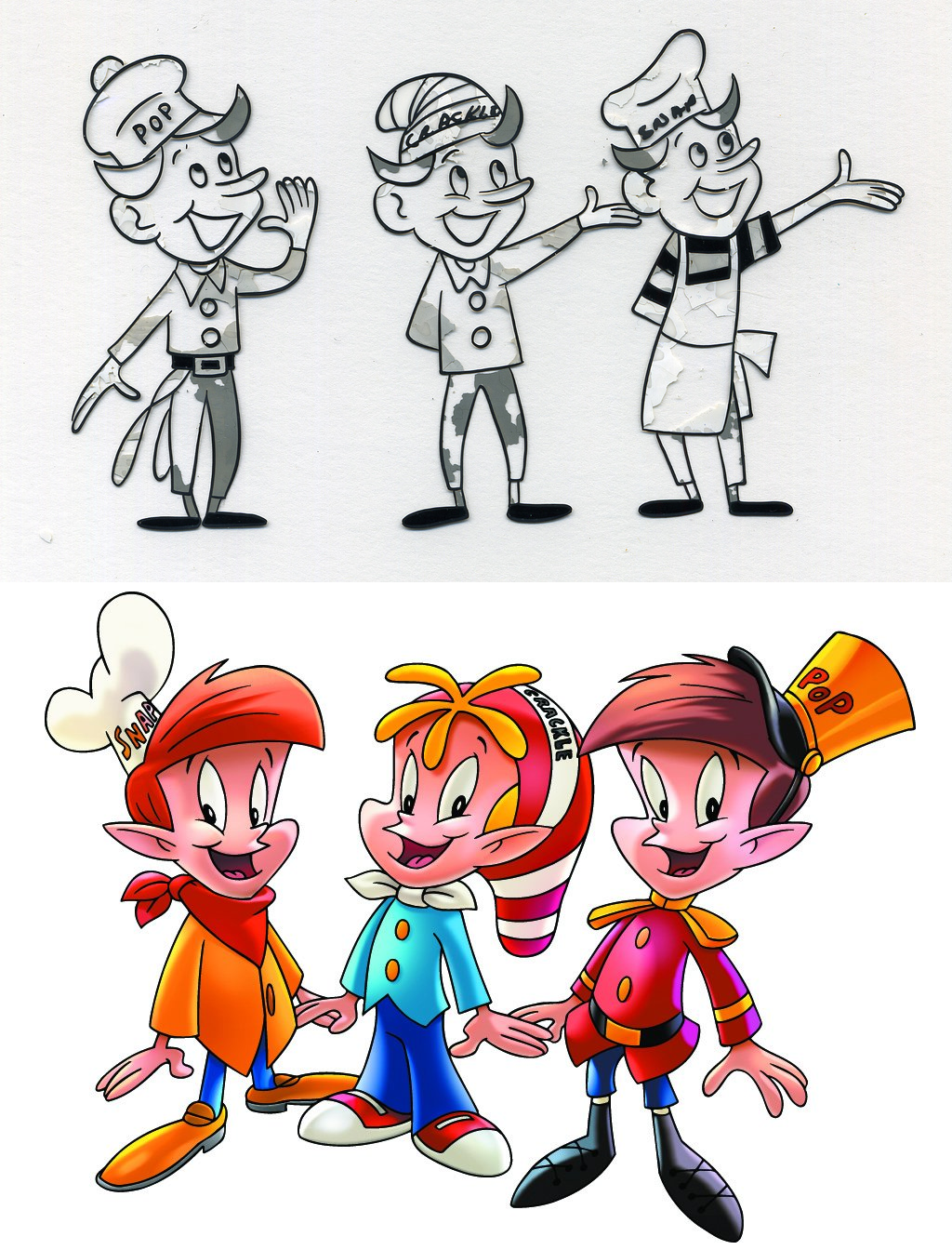
Look at the eyes! You’ll notice that nowadays, and since several decades ago, characters on cereal boxes look down at children, instead of up at them. This is because a child looks up at an adult and sees the eyes in the way these cartoon eyes are drawn. This gives them semblance of authority, and makes them more relatable to the children.
The talk was full of great and interesting points, but the final one I’ll talk about here was about branding and our effect on it. Millman talked about the fact that in this day and age, we have the power to control and change brands more than we ever have before. It used to be the case that a company decided their image, and you either chose to buy into it or not. With the advent of social media, influencers, etc., we’re in a place where we can influence a brand by choosing what we want from it. If a certain style of person starts wearing a particular brand, and that spreads within their circles, the brand will pick up on this and start catering to them. This can be powerful when a group that associates with a brand decides that they care about things like environment and social responsibility… the brands have to listen to their audience, and will change their image (and practices, if you’re optimistic) to reflect this. This can also be dangerous, as we saw with Lacoste getting roped into white supremacist outfits a couple of years ago.
There was a ton more that I heard and thought at the conference, but I figured I’d share a couple of these here so that I can better remember them and so that people who read this are (hopefully) entertained. That’s all from me!

 Richard's Blog